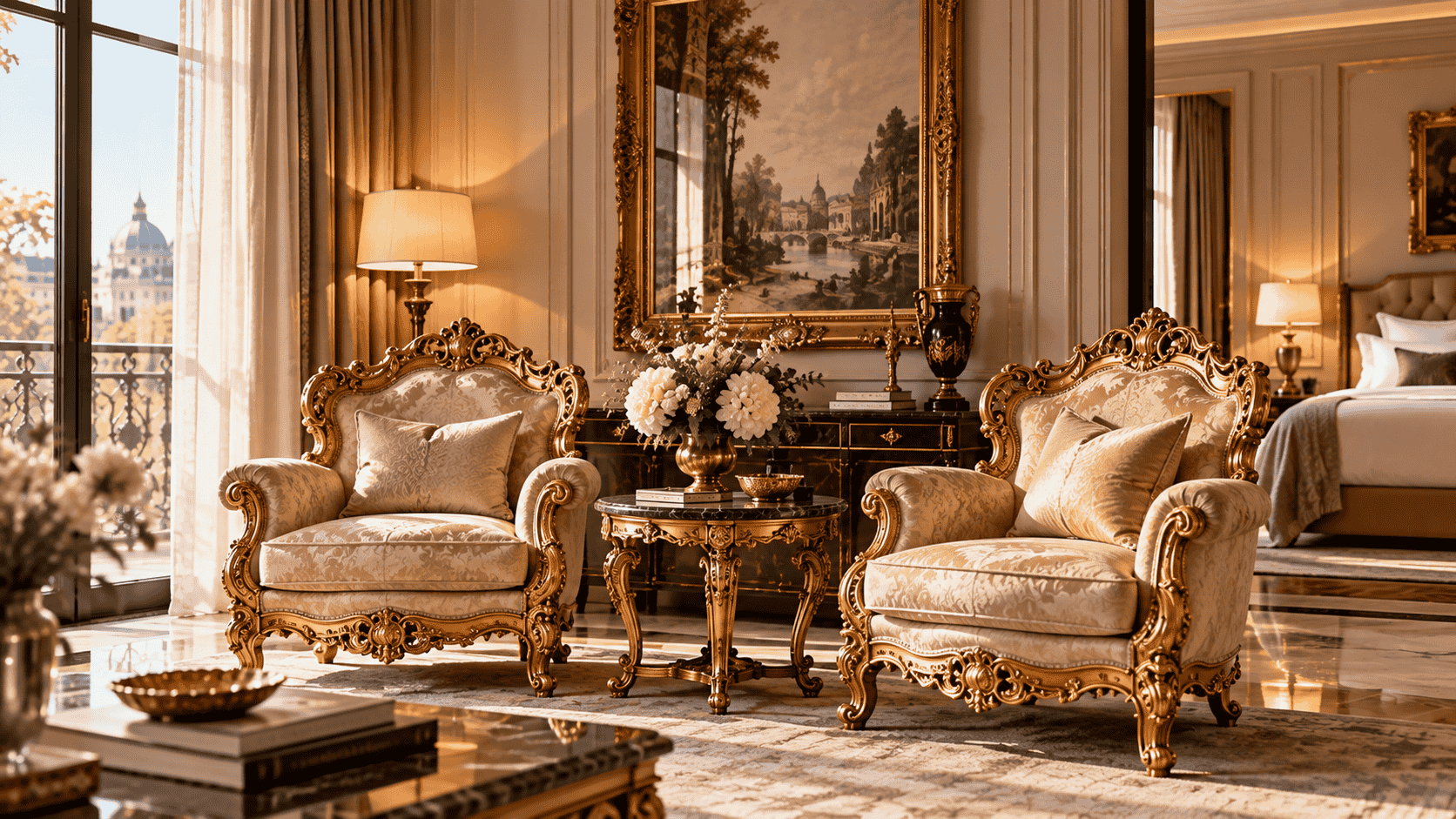
A modern hotel suite can feel polished yet impersonal. Clean lines, neutral surfaces and efficient layouts deliver comfort, but they sometimes lack the sense of occasion that turns a room into a memorable private salon. One of the most effective ways to introduce that quality is also one of the simplest: a carefully chosen pair of baroque armchairs.
These chairs carry carved frames, generous proportions and a formal presence that immediately shifts the emotional temperature of the space. When placed with intention against a contemporary backdrop, they create contrast rather than costume. The suite remains modern; the seating becomes the element that elevates it.
This approach has become a reliable strategy in European luxury and boutique hotels seeking character without historical pastiche.
Why a Pair Works Better Than a Single Statement
A single ornate chair can look like an accidental antique. A matched pair establishes symmetry and conversation. Guests instinctively understand the arrangement as intentional seating rather than decorative display. The two chairs face each other or share a common axis, inviting use and reinforcing the idea of a private salon within the larger suite.
The visual weight of Baroque furniture is substantial. Two chairs balance each other and prevent the room from tipping into either minimalism or excess. The rest of the contemporary suite seating—sofa, daybed or lounge chairs—can remain quieter, allowing the baroque pair to carry the classical note.
The Essential Rule of Contrast
Successful mixing depends on restraint elsewhere. Walls stay calm. The primary sofa keeps clean lines. Tables and lighting favour simple geometry or soft modern forms. Against this quiet field the carved frames, curved arms and richer upholstery of the baroque armchairs read as deliberate focal points.
Colour and material continuity help the dialogue. Warm neutrals, soft metallics or a shared timber tone link the ornate chairs to the surrounding pieces. When the metal finishes and fabric families remain limited, the contrast feels curated rather than chaotic.
Lighting completes the effect. Directional or warm ambient light picks up the depth of carving and the texture of the upholstery, giving the chairs presence after dark as well as during the day.
Three Proven Layouts for Contemporary Suites
The following arrangements have proven effective in modern hotel suites that want classical presence without a themed appearance.
Layout One: The Conversation Pair Opposite a Modern Sofa
Place the two baroque armchairs facing a clean-lined contemporary sofa across a simple coffee table. The sofa provides the quiet mass; the chairs supply the sculptural interest. This arrangement works especially well in the living zone of a junior suite. Guests can sit in either the modern or the classical seats, and the overall composition feels balanced rather than staged.
Layout Two: Flanking a Window or Fireplace Axis
Position the pair on either side of a window, a low console or a contemporary fireplace. The architectural feature becomes the centreline; the chairs frame it. This layout draws the eye toward the view or the hearth while creating two distinct yet related seating positions. It is particularly effective in suites with strong natural light or a clear focal wall.
Layout Three: The Corner Salon
In larger suites, create a secondary seating zone in a corner or alcove. Angle the two baroque armchairs toward each other with a small side table between them. Keep the surrounding walls and floor treatment simple. The result is an intimate salon within the suite—a place for reading, conversation or quiet arrival that feels distinct from the main living area yet fully integrated with the room’s contemporary language.
Each of these layouts relies on the same principle: the baroque armchairs provide the classical note while everything else supports rather than competes.
Upholstery and Frame Choices That Support Modern Settings
Not every historic interpretation suits a contemporary suite. Frames with refined rather than extreme ornament tend to mix more successfully. Soft gold, antique silver or darker timber finishes often sit more comfortably beside modern materials than high-contrast bright gilding.
Upholstery is equally important. Performance fabrics in velvet, textured weave or subtle pattern deliver the tactile richness associated with Baroque furniture while meeting hotel durability standards. Neutral or deep tonal colours—ivory, soft grey, deep green, navy—integrate more readily than highly patterned period textiles.
The goal is a chair that feels substantial and crafted, yet still belongs in a room that also contains sleek tables and restrained lighting.
Practical Considerations for Hotel Use
Commercial performance cannot be secondary. Frames must be stable under repeated use. Joints and legs need to withstand the movement of guests and housekeeping. Upholstery should resist staining and accept professional cleaning. Many makers now offer baroque-inspired forms with reinforced construction and contract-grade fabrics specifically for hospitality.
Scale also matters. In compact suites an overly large pair can dominate circulation. Measuring the intended zone and allowing adequate clearances around the chairs prevents the arrangement from feeling cramped.
The Emotional Effect on Guests
When the mix is successful, guests register a subtle shift. The suite no longer feels purely functional. It carries a sense of private ceremony—the feeling of a salon rather than a standard hotel room. The baroque armchairs become the detail that guests remember and photograph, even if they cannot articulate why the space feels more distinctive.
For operators, this translates into stronger room identity, higher perceived value and a clearer point of differentiation from competitors using only contemporary suite seating.
A Measured Approach to Character
Introducing baroque in modern hotels does not require a full historical scheme. One well-chosen pair of armchairs, placed with attention to proportion, contrast and comfort, is often enough to change the character of an entire suite. The surrounding contemporary elements keep the room current; the chairs supply the depth and formality that turn it into a private salon.
Hotel owners and designers who apply this approach gain a flexible tool. The same modern shell can support different levels of classical presence simply by adjusting the prominence and placement of the baroque pair. The result is a suite that feels both of its time and quietly elevated—an outcome that continues to resonate with discerning guests.
Frequently Asked Questions
Can baroque armchairs work in a small modern suite?
Yes, provided the scale is carefully chosen and clearances are maintained. Slimmer or more refined interpretations usually perform better than heavily oversized frames.
Should the rest of the furniture also be classical?
No. Keeping the majority of pieces contemporary creates the contrast that prevents the room from looking themed.
What upholstery works best for hotel use?
Contract-grade velvets or textured performance fabrics in tonal colours offer both the required durability and the tactile richness associated with the style.
Is a matched pair essential?
A matched pair creates stronger symmetry and a clearer salon feeling, though a carefully chosen single chair can still serve as a focal point in some layouts.
You may also read
How European Boutique Hotels Create Signature Bedrooms with Unique Bed Designs
Schreibe einen Kommentar