
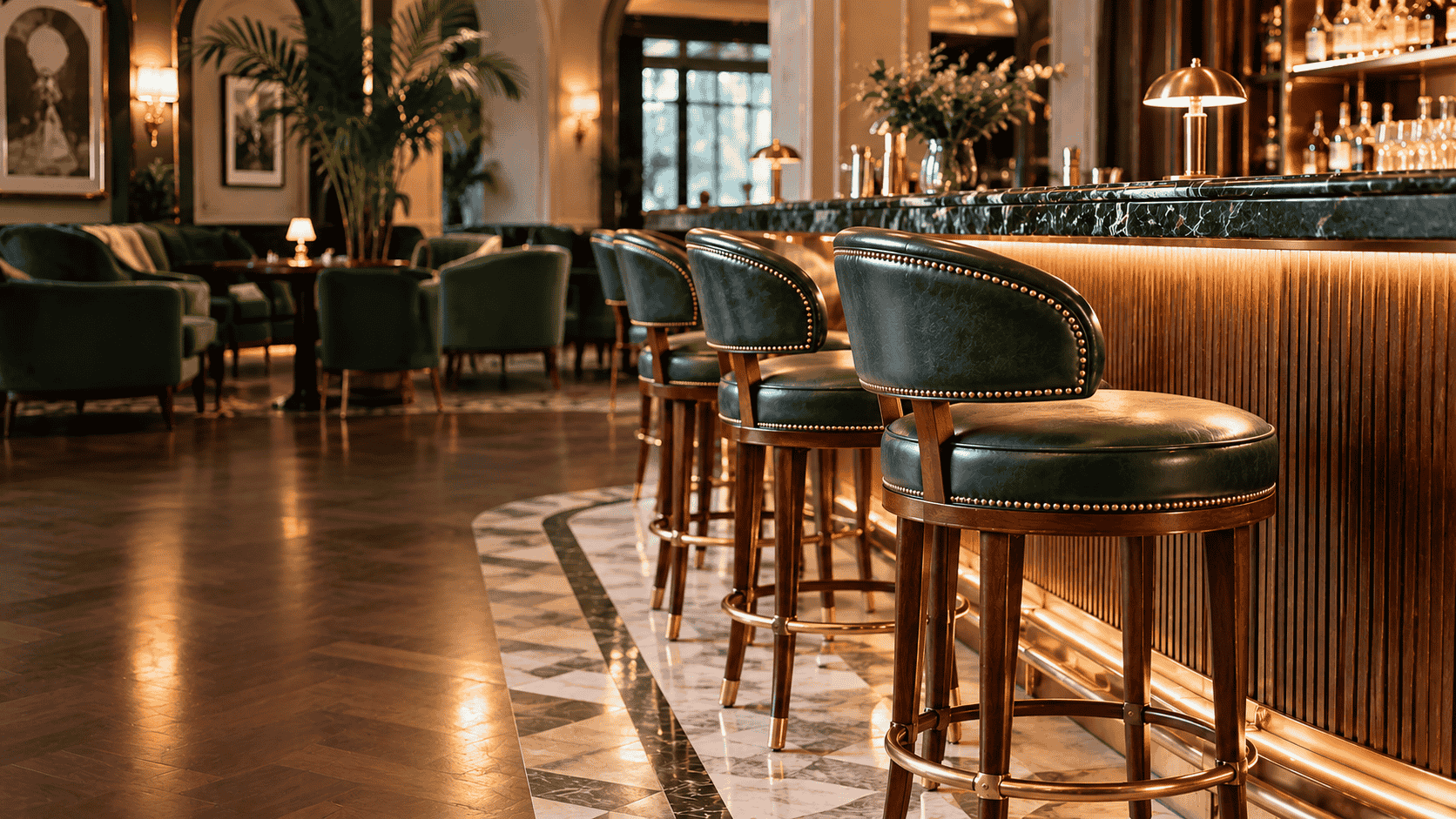
Luxury hospitality design has shifted. After years of clean minimalism and uniform contemporary forms, many European boutique and heritage hotels are turning back toward pieces that carry history and tactile character. Among the clearest signals of this change is the return of vintage-inspired bar stools.
These seats are no longer treated as nostalgic accessories. They have become deliberate tools for creating atmosphere, reinforcing brand identity and encouraging guests to linger. This article examines why vintage bar stools are reappearing in luxury bar furniture schemes and how they serve the practical and emotional needs of today’s premium properties.
The Broader Shift Toward Heritage and Authenticity
Guests increasingly seek spaces that feel collected rather than newly manufactured. Designers report rising demand for furniture that references earlier European periods—Art Deco geometry, mid-century curves, and traditional joinery—while still meeting commercial performance standards.
Vintage-inspired bar stools answer this preference directly. Their proportions, materials and surface treatments suggest continuity with classic hotel bars of the past. In heritage hotel design projects, especially those set within historic buildings, these stools help the interior feel rooted rather than imposed.
The trend is not pure reproduction. Successful versions update structural strength, fire ratings and cleanability so the pieces can withstand daily hotel traffic while retaining the visual language of older designs.
Classic European Styles Finding New Relevance
Several historical references dominate current specifications. Art Deco-inspired stools bring stepped profiles, geometric backs and metallic accents that photograph well and suit glamorous evening atmospheres. Mid-century forms offer lighter silhouettes with tapered legs and organic curves that soften larger rooms. Traditional European stools with cabriole influences or turned details appear in more formal heritage properties.
What unites these directions is a rejection of purely industrial or ultra-minimal seating. Designers and owners want pieces that contribute personality rather than disappear into the architecture. Vintage bar stools achieve this by carrying visible craft and considered detailing without overwhelming the space.
The Role of Antique Finishes and Patina
Surface treatment has become a defining feature. Antique brass, aged bronze, brushed gold and gently distressed wood finishes are preferred over high-chrome or perfectly uniform coatings. These finishes develop character over time and align with the broader hospitality interest in materials that age gracefully.
Patina is no longer viewed as wear to be avoided. When controlled and intentional, it communicates authenticity. Guests respond to surfaces that look handled and lived-in rather than factory-fresh. In luxury bar furniture schemes this quality helps the bar feel established from the first day of operation.
Leather Upholstery as a Signature Element
Leather remains one of the strongest materials associated with the vintage revival. Full-grain and aniline leathers develop a natural sheen through use, creating the soft, inviting quality that synthetic alternatives struggle to match. Darker tones—cognac, deep brown, black and burgundy—dominate because they conceal marks while still reading as premium.
In high-traffic hotel bars the practical advantages are equally important. Quality leather resists abrasion, cleans reliably and maintains its appearance longer than many performance fabrics when properly specified. Combined with solid frames and commercial-grade foam, leather-upholstered vintage bar stools deliver both the desired aesthetic and the durability required for continuous service.
Handcrafted Details That Signal Quality
Visible craftsmanship has returned as a mark of distinction. Hand-stitched seams, solid timber or metal frames with careful joinery, and thoughtfully designed footrests separate serious pieces from mass-produced options. These details matter because guests notice them, even if only subconsciously.
In heritage hotel design the presence of handcrafted elements reinforces the property’s claim to authenticity. A stool that feels substantial and carefully made supports the broader narrative of careful stewardship and refined taste. For owners, the investment often pays back through longer product life and stronger visual consistency across the bar area.
Practical Advantages for Hotel Operations
Beyond atmosphere, vintage-inspired stools offer operational benefits when specified correctly. Stable bases and well-positioned footrests improve guest comfort during shorter stays typical of bar service. Swivel mechanisms, where included, allow easier conversation and movement without requiring guests to stand.
Because many designs draw from proven historical proportions, they integrate readily with existing classic interiors. This reduces the need for extensive redesign when refreshing a bar within a listed or historically sensitive building. The result is a lower-risk route to updating the guest experience while respecting the architectural context.
How the Style Supports Guest Behaviour
Seating influences how long guests remain and how they interact. The slightly formal yet inviting character of vintage bar stools encourages upright, engaged postures suitable for conversation and people-watching. At the same time the material richness and visual warmth make the seats feel welcoming rather than severe.
In properties aiming for a sophisticated evening atmosphere these qualities help define the social temperature of the bar. Guests stay longer, order more deliberately, and leave with a stronger memory of place. That combination supports both revenue and reputation.
Selecting Vintage-Inspired Pieces with Care
Not every nostalgic design succeeds in a commercial setting. Owners and designers should prioritise structural integrity, certified fire performance, and finishes tested for hotel cleaning regimes. Proportions must also suit the specific counter height and circulation paths of the space.
When these practical requirements are met, vintage bar stools become more than decorative references. They function as durable, characterful components of a coherent luxury bar furniture scheme that aligns with the wider direction of heritage hotel design.
A Lasting Direction Rather Than a Passing Trend
The return of vintage-inspired bar stools reflects a deeper recalibration in luxury hospitality. After a period dominated by uniform contemporary forms, properties are again valuing individuality, material honesty and references to European design history. These stools embody that shift in a highly visible and functional way.
For hotel owners planning bar refreshes or new openings, the style offers a proven route to atmosphere that feels both current and enduring. When executed with attention to craft, finish and commercial performance, vintage bar stools strengthen the identity of the space and the experience of the guests who use it.
Frequently Asked Questions
Are vintage-inspired bar stools durable enough for daily hotel use?
Yes, when specified with commercial-grade frames, tested finishes and quality upholstery such as full-grain leather. Proper construction allows them to meet the same performance standards as contemporary designs.
Do these stools only suit historic buildings?
No. They work equally well in new-build properties that seek a layered, collected aesthetic rather than a purely minimalist one.
What finishes are most popular in current European projects?
Antique brass, aged bronze, gently distressed wood and deep leather tones appear most frequently because they develop character while remaining practical.
How do vintage bar stools affect guest dwell time?
Their combination of visual warmth and supportive design often encourages longer, more comfortable stays compared with purely utilitarian seating, supporting higher average spend in the bar.
Schreibe einen Kommentar