A guest walks into a hotel room for the first time. Within seconds — before they have read a menu card or tested the shower pressure — they have already formed an impression. That impression is built almost entirely from what they see and feel in the space around them.
Every piece of hotel room furniture in that room either earns its place or quietly undermines the experience.
Yet surprisingly few hoteliers and interior designers approach furniture specification with a structured framework. Pieces get added reactively, budgets get shuffled, and rooms end up with a writing desk but no comfortable chair to sit in at it, or a generous wardrobe beside a luggage rack that blocks the bathroom door.
This guide changes that. What follows is a complete, zone-by-zone breakdown of exactly what hotel room furniture a luxury property needs — and why each piece matters.
Zone One: The Entry — Where First Impressions Begin
The entry of a hotel room is a transition space, and it is one that most furniture specifications completely overlook. Yet it is the first zone a guest physically occupies, and it sets the emotional tone for everything that follows.
At minimum, a well-specified entry zone requires a full-length or generous console mirror, a luggage rack or dedicated luggage stool, and a slim console table or surface for keys, phones, and personal items.
The luggage rack deserves particular attention. It is one of the most used pieces of hotel room furnishings in any property, yet it is frequently treated as an operational afterthought. A beautifully finished rack — in brass, walnut, or lacquered steel — signals immediately that care has been extended to every detail of the room.
Zone Two: The Sleeping Area — The Non-Negotiable Heart of the Room
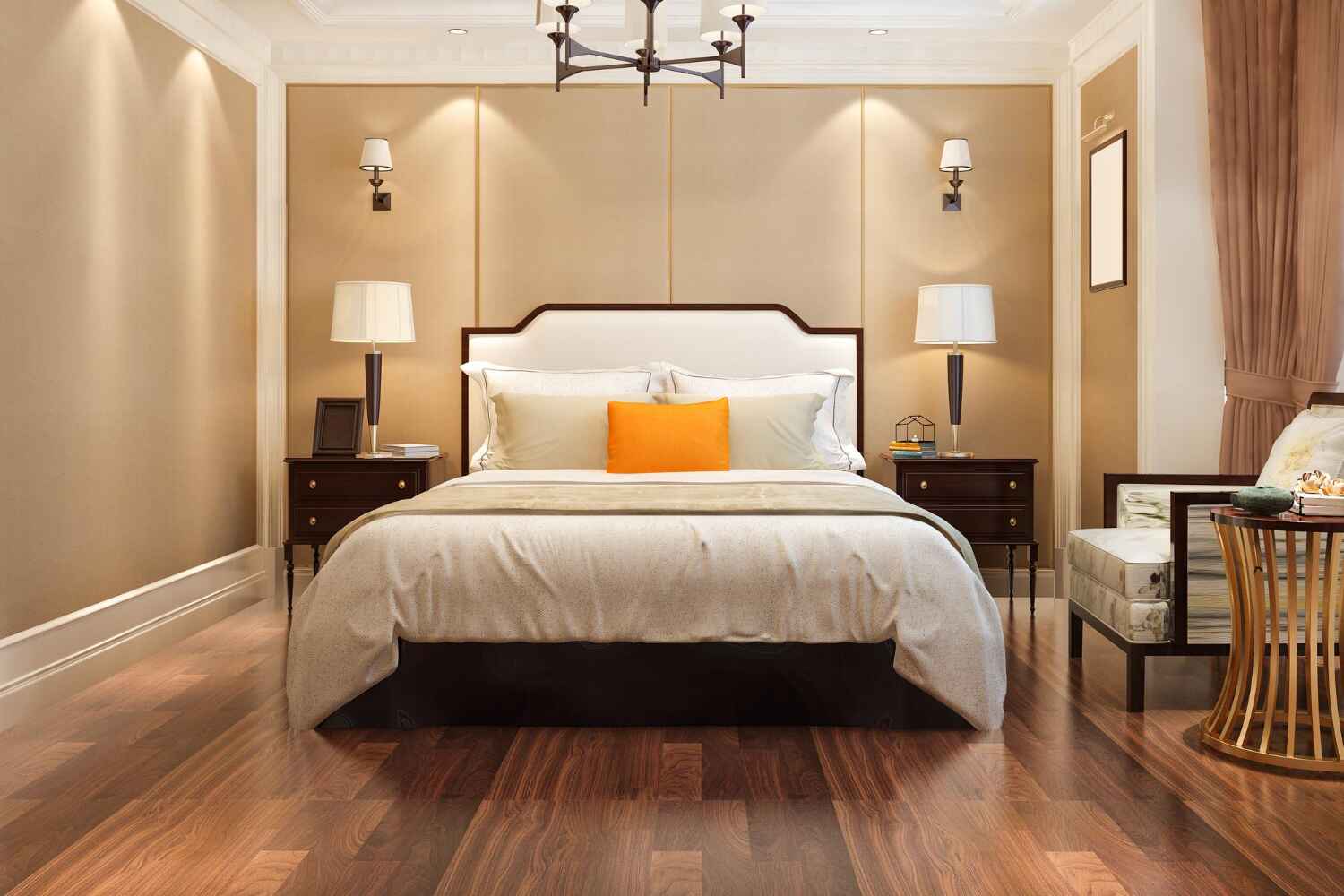
The bed is the centrepiece of all hotel bedroom furniture, and rightly so. Every other decision in the room radiates outward from it.
The bed frame must do more than support a mattress. It must communicate quality, define the room’s aesthetic language, and withstand years of commercial use without showing fatigue. Upholstered headboards in performance fabric remain the most popular choice for luxury properties — they combine visual warmth with the tactile comfort guests associate with genuine luxury.
Flanking the bed, nightstands are essential on both sides. In a luxury context, these should offer a surface generous enough for a lamp, a glass of water, and a phone — without feeling cluttered. Integrated USB charging or discreet cable management features are increasingly expected by modern guests.
Bedside lighting, whether wall-mounted or table-based, should be considered part of the furniture specification rather than left entirely to the lighting designer. The relationship between a lamp and the nightstand it sits on is one of the most visible details in any hotel bedroom furniture arrangement.
An upholstered bench at the foot of the bed completes the sleeping zone. Functionally, it provides a surface for laying out clothing. Aesthetically, it grounds the bed visually and adds a layer of considered luxury that guests notice and appreciate.
Zone Three: The Working Area — Function Without Compromise
Business travel has not disappeared — it has evolved. Guests working from hotel rooms expect a proper writing desk and a chair that genuinely supports extended periods of seated work.
The desk should be proportioned for real use: deep enough for a laptop and a notepad, with a surface material that feels considered rather than laminated. Paired with a well-upholstered desk chair — not a repurposed dining chair — this zone communicates that the property takes its guests‘ productivity seriously.
This is one area where hotel room furnishings frequently disappoint. A beautiful desk paired with an inadequate chair is a missed opportunity that guests will mention in reviews.
Zone Four: The Lounge Area — Comfort That Invites Guests to Stay
Not every hotel room has space for a full lounge zone, but every luxury room should offer at least one upholstered accent chair. In suite configurations, a compact sofa or loveseat, a side table, and a lounge chair create a genuine living space within the room.
The lounge chair is among the most important supplementary pieces in the hotel furniture hierarchy. It is where guests read, take calls, put on shoes, and decompress after a long day. Its scale, seat depth, and upholstery comfort are all critical.
A side table or occasional table paired with the lounge chair completes this zone. It should be proportionally balanced to the chair — not so low as to be unusable, not so tall as to feel awkward.
Zone Five: Storage — The Quiet Workhorse of the Room
Storage furniture rarely photographs beautifully, but its absence is felt immediately by every guest who opens a suitcase.
A wardrobe or fitted storage unit is essential hotel room furniture in any category above budget. For luxury properties, the interior specification matters as much as the exterior — proper hanging rails, shelf depth, and drawer construction all affect the daily guest experience.
A chest of drawers or dresser provides supplementary storage and often doubles as a surface for the in-room television. Proportioning this piece correctly — neither so large it dominates nor so small it feels token — requires genuine design consideration.
Conclusion: Specification Is a Form of Hospitality
When hotel furniture is specified thoughtfully — zone by zone, piece by piece — the result is a room that feels complete rather than assembled. Guests cannot always name what makes a room exceptional, but they feel it from the moment they walk through the door.
Every piece of hotel room furnishings either contributes to that feeling or dilutes it. There is very little neutral ground.
Approach your next hotel room furniture specification with this framework, and the decisions become significantly clearer — and the guest experience significantly stronger.
Schreibe einen Kommentar