The first thirty seconds inside a luxury suite are a sensory whirlwind. You glide past the heavy acoustic door, drop your key card, and take in the view. Your eyes scan the crisp symmetry of the bed linen, the ambient glow of the lighting, and the curated palette of the space. But before you even unbutton your travel coat, a subtle architectural element is already working on your subconscious mind.
We often talk about statement headboards or panoramic windows, but the true unsung hero of hospitality psychology are the hotel room wardrobes. Far from being a mere storage box, this central piece of hotel room furniture dictates how quickly a traveler transitions from the high-alert friction of transit into a state of deep relaxation.
The Arrival Threshold and the Unpacking Ritual
Travel inherently disrupts our sense of control. Delays, crowded terminals, and living out of a suitcase create a mild, continuous undercurrent of stress. When a guest enters their room, they are looking for a psychological anchor. They want to shed the baggage of the journey—both literally and figuratively.
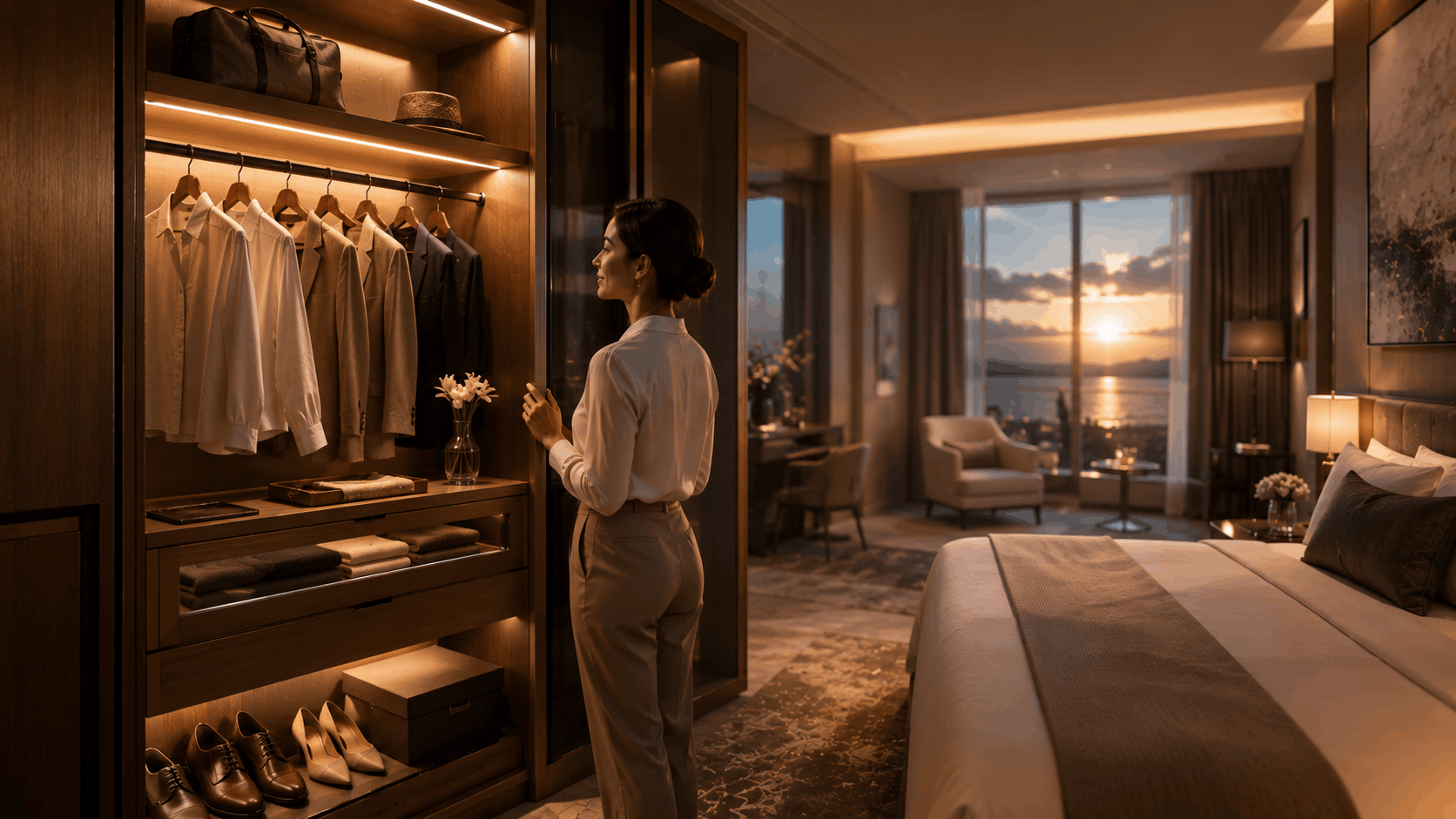
Opening the hotel room wardrobe is an act of arrival. It is the definitive threshold where a temporary room transforms into a personal sanctuary. When that closet door swings open effortlessly, revealing a pristine, thoughtfully laid-out interior, a signal flashes to the brain: You have arrived. You are safe. You can let your guard down.
The Hidden Sensory Layers of Wardrobe Design
Great hospitality design is felt rather than seen. When luxury hotel furniture manufacturers construct premium cabinetry, they rely on a delicate interplay of sensory triggers to evoke an emotional response.
1. The Gentle Glow of Integrated Lighting
Dark, cavernous closets provoke irritation. The moment a wardrobe door opens, a warm, diffused LED strip should gently illuminate the interior. This hidden lighting acts like a high-end retail display, presenting your clothes as if they belong in a boutique. It creates a calming visual clarity that makes getting dressed feel like a curated experience rather than a chore.
2. Tactile Materiality and Weight
Cheap laminates and hollow doors ruin the illusion of luxury. High-end hotel bedroom furniture utilizes heavy wood veneers, brushed brass hardware, and leather-lined shelving. The satisfying weight of a solid door and the soft, silent dampening of a magnetic latch provide an immediate sense of structural permanence and quality.
3. The Olfactory Hello
The smell of stale air or chemical cleaners instantly breaks the hospitality spell. Elite hoteliers embed subtle, natural scents into the wardrobe joinery—think cedarwood, soft amber, or clean linen. This delicate fragrance greets the guest the moment the doors part, wrapping their garments in a comforting, premium olfactory embrace.
Spatial Intelligence: Moving Beyond the Standard Box
In modern hospitality, traditional heavy, dark wardrobe boxes are giving way to open-frame structures and tinted glass configurations. This design shift is deeply rooted in environmental psychology.
[Closed, Heavy Wardrobe] –> Can feel restrictive or hide forgotten items
[Open or Glass Wardrobe] –> Enhances visual space, airflow, and peace of mind
By utilizing floating metal frames and integrated lighting, designers make smaller suites feel expansive. Furthermore, open layouts remove the anxiety of leaving valuable items behind when checking out, providing guests with absolute visual peace of mind throughout their stay.
A Direct Reflection of Perceived Room Quality
The wardrobe is an operational litmus test for the entire property. Guests instinctively assume that if a hotel invests in heavy, soft-closing velvet hangers and flawlessly aligned drawer dividers, the same meticulous care is applied to kitchen hygiene, linen sanitation, and guest services. It serves as a physical proof of an uncompromised standard of luxury.
Poll: What’s the first thing you notice when opening a hotel wardrobe?
Is it the number and quality of the hangers? The presence of automatic lighting? Or perhaps the faint fragrance of cedar?
I remember checking into a boutique property in London after a grueling ten-hour flight delay. My clothes were wrinkled, and my patience was completely exhausted. I walked into the room, opened the master closet, and was met with a beautifully lit, cedar-scented alcove complete with a built-in steamer and plush fabric-wrapped hangers. In an instant, my travel frustration evaporated. I felt entirely taken care of before I even unpacked my first shirt.
The next time you step into a new room, pay close attention to that initial interaction. You might just realize that the unassuming wardrobe is the most comforting piece of luxury hotel furniture in the entire suite.
You may also read
Modular Hotel Bedroom Furniture: Flexible Solutions for Changing Guest Needs
Schreibe einen Kommentar