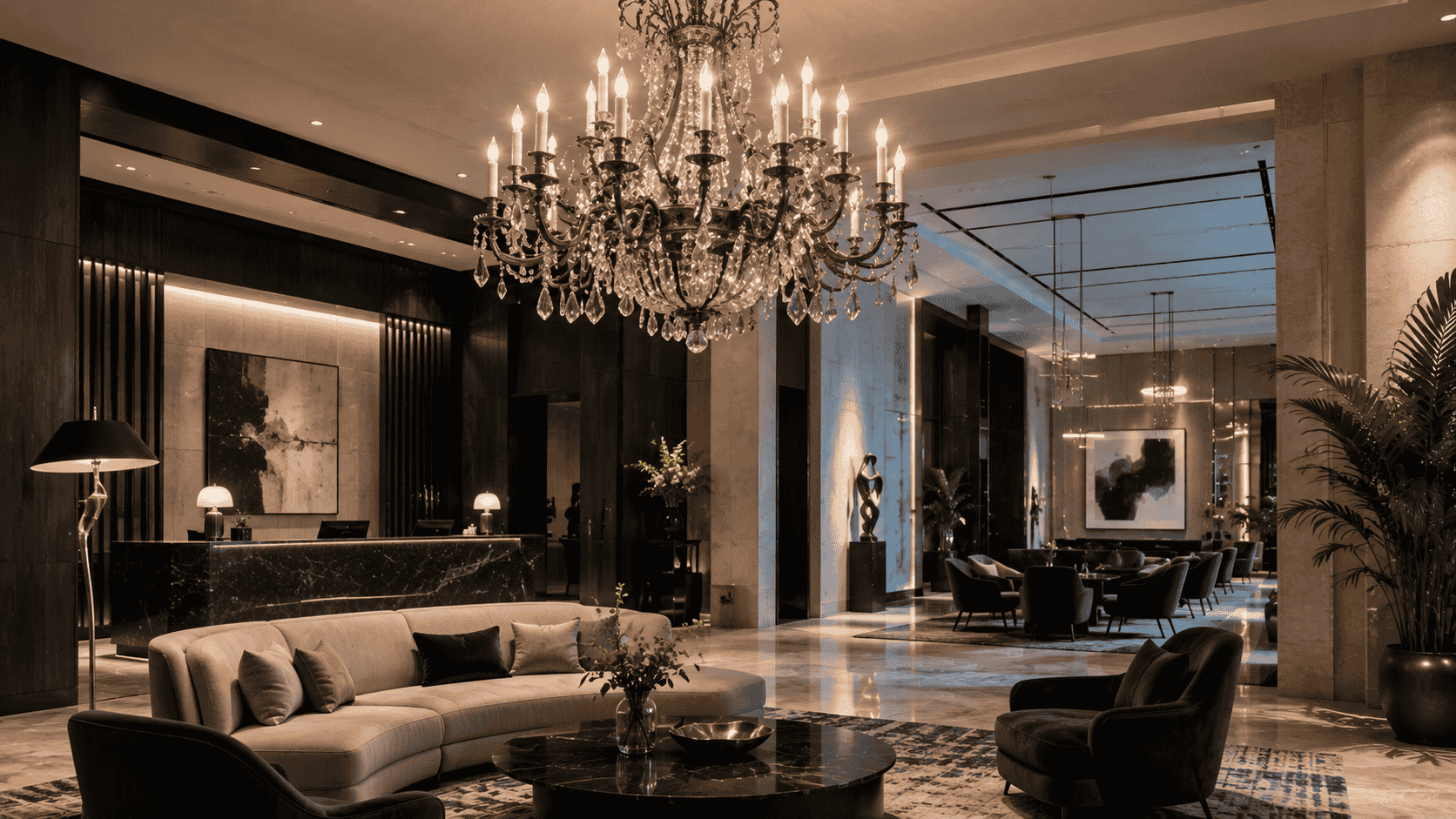
A lobby frozen in a single decade feels like a museum, not a destination. The most memorable hotels breathe across time. They layer old and new, heavy and light, ornate and minimal. And no single object performs this alchemy better than the antique chandelier suspended above a concrete desk or a glass elevator. That clash of centuries creates magic.
I spoke with three interior designers who specialize in heritage‑meets‑modern hospitality projects. Their collective wisdom offers a roadmap for any property owner seeking to install vintage chandeliers without falling into period‑themed cliché. Here is how they make the old feel startlingly fresh.
Why the Contrast Works
Designer Miriam Sloane has hung antique chandeliers in twenty‑seven hotels across Europe and the Middle East. “People assume you need a traditional room to match a traditional fixture,” she told me. “Wrong. A crystal chandelier against raw concrete or matte black steel becomes sculpture. The tension wakes up both elements.”
The psychological effect is real. A luxury chandelier from the 1920s floating above a minimalist check‑in desk tells guests: This place has history but refuses to be trapped by it. That message appeals to modern travelers who crave authenticity without stuffiness.
Sloane shared her favorite example: a Milan property where a restored neoclassical chandelier hangs inside a glass‑walled atrium. By day, sunlight competes with crystal. By night, the chandelier glows against the dark sky while minimalist furniture sits below. The result has been featured in four design publications.
Scale and Suspension: The Two Golden Rules
When mixing eras, scale determines success or failure. Designer Henrik Voss emphasized this point repeatedly. “A massive antique chandelier in a low‑ceilinged contemporary room crushes the space,” he said. “The same chandelier in a double‑height lobby with clean walls becomes a focal point.”
His rule of thumb: measure the room’s volume, then subtract 20% for modern interventions. An oversized fixture works only when the surrounding architecture recedes. White walls, unadorned floors, and simple furniture give the chandelier room to breathe.
Suspension height matters equally. Contemporary interiors often call for lower‑hung fixtures than traditional settings. “I drop vintage chandeliers about thirty percent lower than period practice,” Voss admitted. “It creates intimacy in a vast space. Guests feel the piece, not just see it.”
Rewiring and Refinishing Without Erasing Character
Luxury hotel decoration demands safety alongside beauty. Every antique chandelier installed in a commercial property must be completely rewired to meet modern electrical codes. But the best restoration shops go further. They replace sockets while keeping original bobeches and drip pans. They add LED filament bulbs that mimic warm candle glow without heat or energy waste.
Finishing presents another choice. Some clients insist on preserving original patina—tarnished brass, chipped crystal, darkened bronze. Others want full restoration to the fixture’s original shine. Voss recommends a middle path. “Clean thoroughly. Repair structural damage. Then stop. A luxury chandelier that looks brand‑new belongs in a reproduction catalog, not a heritage hotel.”
One of his projects kept a 1905 chandelier’s uneven drip patterns on the candle covers. Guests assume it is intentional artistry. In fact, it is authentic wear from decades of melted wax. That honesty communicates more than any brochure.
Pairing with Contemporary Furniture
A vintage chandelier should never fight its surroundings. Designer Elena Wu advises building a palette before choosing the fixture. “Pull three colors from the chandelier’s materials—brass, crystal, iron—and repeat them elsewhere in the room,” she said. “A brass chandelier asks for brass hardware on doors or brass legs on a sofa. That visual echo ties centuries together.”
She also warns against competing shapes. A highly ornate chandelier with scrolling arms and floral details pairs best with blocky, rectilinear furniture. The straight lines of a modern leather sectional balance the chandelier’s curves. Conversely, a simpler Georgian chandelier can handle more adventurous contemporary seating.
Her favorite pairing: a 1920s cut‑glass chandelier above a concrete dining table surrounded by black wishbone chairs. “Nothing matches. Everything belongs.”
Where to Source and What to Inspect
For hotel owners, sourcing antique chandeliers requires due diligence. Wu recommends buying only from reputable architectural salvage dealers who provide restoration documentation. Before purchasing, inspect for four things: structural integrity of the central rod, presence of original glass or crystal (replacements lower value), flexibility in adding a mounting brace for modern ceilings, and any signs of past fire damage.
“Do not buy sight unseen,” Wu stressed. “Fly to see the piece. Hang a temporary weight from it. Watch how light passes through the crystals. A video cannot show you the soul.”
The Investment Case
A quality vintage chandelier costs more than a new reproduction. But it also appreciates. Several designers noted that their hotel clients now list original antique fixtures as insured assets, not depreciating furniture. And guests notice. Online reviews frequently mention “the incredible historic chandelier in the lobby.” That is free marketing no ad budget can buy.
Final Sparkle
The next time you plan a renovation, resist the urge to match eras perfectly. A contemporary hotel interior gains depth, warmth, and story from a single antique chandelier. It tells guests you respect the past but refuse to live there. That tension is not confusion. It is sophistication. Hang it proudly. Let the centuries talk.
You may also read
Which Chandelier Style Will Best Match Your Hotel’s Interior and Brand Identity?
Schreibe einen Kommentar