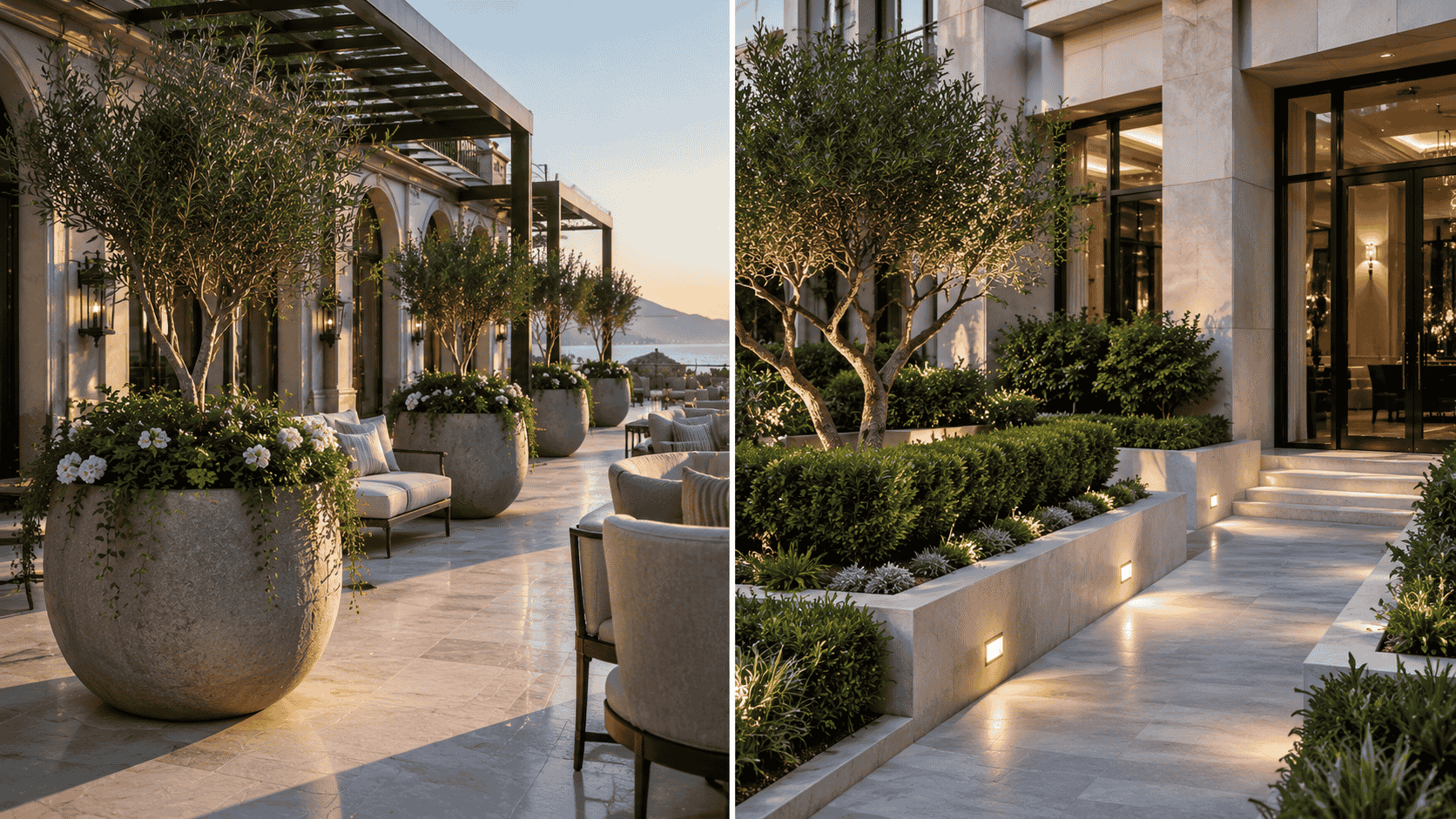
When designing the exterior landscape of a premium hospitality property, the greenery is just as critical as the architectural facade. A blank terrace or an unadorned pool deck can feel cold and commercial. Introducing rich, layered plant life softens these hard structural surfaces, turning a simple concrete walkway into an immersive, private sanctuary for arriving guests.
However, upscale hotel operators face a critical dilemma during the initial design and renovation phases: Should you commit to permanent, built-in concrete masonry beds, or invest in flexible, high-end architectural containers? While permanent structures might initially seem integrated, modern commercial large outdoor planters provide massive operational, fiscal, and aesthetic advantages that built-in alternatives simply cannot match.
The Power of Design Flexibility and Seasonality
The hospitality industry thrives on evolution. A space that functions beautifully as a vibrant, sun-drenched lunch terrace in July may need to transform into a cozy, fire-lit cocktail lounge by late October.
Built-in concrete beds permanently freeze your floor plan. If your structural layout is set in stone, changing the traffic flow for large private events, weddings, or seasonal expansions becomes completely impossible.
Choosing standalone large planters gives management absolute spatial freedom. Lightweight yet incredibly durable commercial vessels can be moved easily by property maintenance teams. This allows you to open up floor space for a temporary summer stage or rearrange layout borders seamlessly to maximize seating capacity during peak business hours.
Mitigating Structural Risk and Building Liability
For elevated hospitality spaces—such as high-end rooftop bars, balconies, and penthouse terraces—water management is an ongoing engineering challenge. Built-in masonry units are notorious for developing micro-cracks over time due to building settling, earthquakes, or aggressive root expansion.
When a permanent concrete planter leaks, water seeps into the sub-flooring, causing massive structural damage to guest rooms below. Fixing a failure in a built-in bed requires demolishing the masonry, destroying the plants, and closing down high-revenue spaces for weeks of noisy construction.
The Liner Advantage: Commercial-grade standalone containers completely isolate water and soil within a self-contained unit. Advanced drainage ports connect directly to sub-deck plumbing lines, keeping guest balconies bone-dry and protecting the building envelope.
A Detailed Material and Cost Comparison
| Operational Metric | Built-In Concrete Masonry | Premium Standalone Containers |
| Initial Structural Weight | Extremely heavy; requires reinforced concrete slabs | Lightweight composite options (like GFRC or fiberglass) |
| Long-Term Maintenance | Regular waterproofing, sealing, and crack repairs | Simple quarterly wipe-downs; highly weather-resistant |
| Root Control Management | Roots can crack concrete and penetrate building lines | Self-contained walls naturally restrict destructive root paths |
| Installation Speed | Weeks of wet pouring, framing, and masonry labor | Delivered fully finished; ready for immediate planting |
Enhancing Guest Impression with Scale and Texture
Luxury is defined by deliberate, high-impact design choices. Built-in planter boxes often blend anonymously into the background architecture because they use the same stucco or stone finish as the main walls. They provide greenery, but they rarely serve as a design statement.
Bespoke luxury planters function as intentional works of art. Whether you select ultra-sleek, powder-coated marine aluminum to match an urban sky lounge or choose heavily textured, hand-finished stone vessels to anchor a traditional Mediterranean entrance, these containers catch the eye. They add depth, contrast, and a distinct layer of premium curation that makes a property feel entirely unique.
Root Health and Landscape Longevity
Plants in commercial environments face intense environmental stress. When a specific tree species succumbs to a localized blight or struggles with an unexpected seasonal frost, replacing it in a built-in bed is a labor-intensive mess that disrupts the guest experience.
Standalone systems allow garden crews to easily swap out underperforming flora behind the scenes, ensuring your public-facing areas always look flawless. Furthermore, individual containers allow you to tailor the specific soil composition, drainage rate, and fertilization schedule for each individual plant, resulting in healthier, more vibrant greenery across your entire layout.
Making the Right Choice for Your Property
While built-in architectural beds have their place in grand, unyielding public parks, they lack the agility and security required by modern luxury hospitality venues. Investing in high-performance large outdoor planters protects your building from water damage, reduces installation labor, and provides the spatial flexibility needed to adapt to changing trends. By choosing versatile, premium containers, you ensure your outdoor areas remain beautiful, functional, and highly profitable for years to come.
You may also read
Schreibe einen Kommentar