
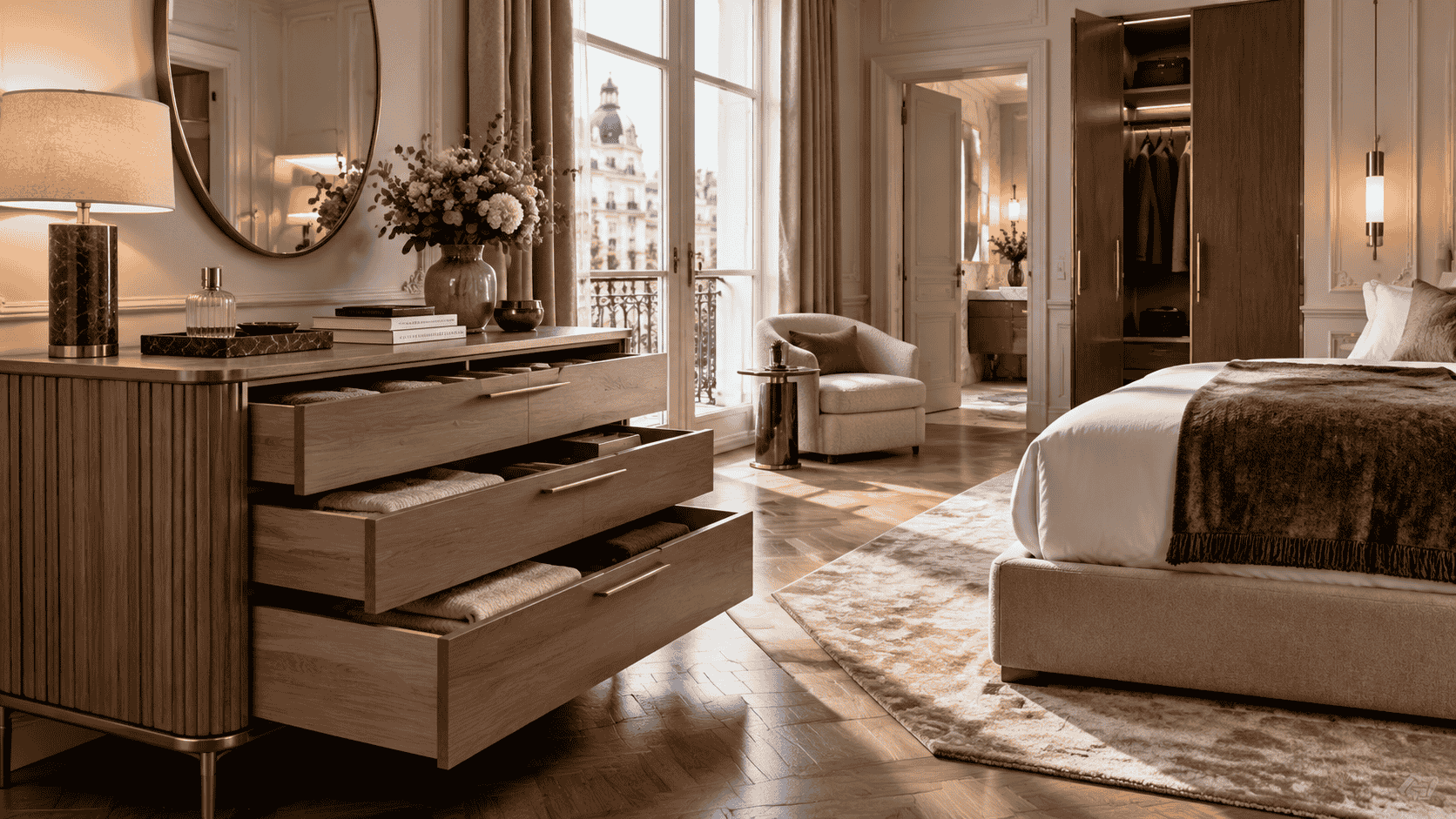
Selecting the right dresser for a boutique hotel room is more than a matter of style. The piece must deliver reliable storage, withstand constant guest use, and still contribute to the refined atmosphere that defines luxury hospitality. Hospitality designers who work regularly with European boutique properties emphasise five practical considerations that consistently separate successful choices from costly missteps.
This guide distils those insights into clear, actionable advice for hotel owners and design teams specifying a Luxury Dresser or coordinating broader Hotel bedroom Furniture schemes.
Tip 1: Match Scale Precisely to the Room Footprint
Boutique hotel rooms in Europe often range between 20 and 35 square metres of usable bedroom space. A dresser that looks balanced in a showroom can overwhelm a compact suite or leave valuable wall space under-utilised in a larger junior suite.
Designers recommend starting with accurate measurements of the available wall length and the depth of the room. Allow at least 90 centimetres of clear space in front of the dresser so drawers can open fully without blocking circulation. Side clearance of 30 centimetres on at least one side also helps housekeeping and maintenance access.
For standard boutique rooms a width of 120 to 160 centimetres usually works well. Suites with more generous proportions can accommodate 180 centimetres or wider statement pieces. Height should sit comfortably below any wall-mounted lighting or artwork—typically between 80 and 95 centimetres—so the dresser remains a horizontal anchor rather than competing with the bed headboard.
Tip 2: Prioritise Materials Built for Commercial Life
Aesthetics matter, yet durability determines long-term cost. Solid hardwood or high-quality veneered plywood cores with robust edge banding resist the knocks of luggage and daily cleaning better than particleboard alternatives.
Finishes must tolerate frequent wiping with commercial disinfectants. Soft-matte lacquers, carefully sealed wood oils, and certain high-pressure laminates perform reliably while retaining a refined appearance. Designers advise requesting abrasion and chemical-resistance data sheets before final approval.
Hardware is equally critical. Soft-close drawer runners rated for at least 50,000 cycles and load capacities above 40 kilograms prevent the early failures that frustrate guests and increase maintenance calls. These details transform a visually appealing luxury bedroom dressers into a practical asset that lasts through multiple seasons of intensive use.
Tip 3: Align Colour and Finish with the Overall Palette
Colour sets the emotional tone of the room. In quieter luxury schemes favoured across much of Europe, muted tones—warm greys, soft taupes, deep walnuts, or ivory with subtle metal accents—create calm without feeling cold.
A dresser that contrasts too sharply with the bed frame, wardrobe or wall colour can fracture the visual unity of the space. Designers therefore prefer finishes that echo or gently complement the primary materials already specified. A light oak dresser can soften a darker walnut bed, while a fluted white piece with gold trim introduces quiet drama against neutral walls.
Lighting also influences perceived colour. Samples should be viewed under the same warm or cool lighting planned for the guest room. This simple step prevents unpleasant surprises once the furniture is installed.
Tip 4: Design Storage Around Actual Guest Behaviour
Guests arrive with varying amounts of clothing and accessories. A dresser that looks elegant but offers shallow or poorly organised drawers quickly frustrates. Designers suggest thinking in terms of usable volume rather than drawer count alone.
Deeper lower drawers accommodate folded garments and bags. Shallower upper drawers work well for smaller items. Soft-close mechanisms and smooth runners encourage guests to close drawers properly, reducing wear. Some projects include a shallow top drawer or tray for valuables, improving both security and convenience.
In rooms where wardrobe space is limited, a well-planned dresser becomes the primary storage solution. Coordinating drawer depths and internal organisation with the wardrobe layout ensures guests find everything they need without cluttering surfaces.
Tip 5: Coordinate the Dresser with Bed and Wardrobe for Visual Cohesion
A dresser never stands alone. Its relationship to the bed and wardrobe determines whether the room feels composed or fragmented. Designers treat the three elements as a single composition.
Matching or complementary wood tones create continuity. Consistent metal finishes on handles and legs reinforce the same language. Proportions should also relate: a low, wide dresser balances a tall headboard, while a taller dresser can pair successfully with a more understated bed frame.
When the wardrobe is built-in or floor-to-ceiling, a freestanding Luxury Dresser provides a useful horizontal counterpoint and additional surface for a lamp or decorative object. The goal is a room that feels intentionally layered rather than assembled from unrelated pieces.
Bringing the Tips Together
These five considerations—precise scale, commercial-grade materials, harmonious colour, practical storage design, and careful coordination—form a reliable framework for specifying dressers in boutique hotel rooms. When each element is addressed, the finished room supports both guest comfort and operational efficiency.
Hotel owners who apply this approach consistently report fewer maintenance issues, stronger visual coherence across room categories, and higher guest satisfaction with storage provision. The dresser ceases to be a simple storage unit and becomes an integral part of the Hotel bedroom Furniture story.
Selecting the right piece requires attention to detail, yet the reward is a room that feels considered, durable and quietly luxurious—qualities that European boutique travellers notice and remember.
Frequently Asked Questions
What is a practical width range for a dresser in a standard boutique hotel room?
Most designers recommend 120 to 160 centimetres for typical European boutique rooms, adjusting upward only when the floor plan allows generous clearances.
Which materials perform best under hotel cleaning regimes?
Sealed solid wood or high-quality veneered plywood with chemical-resistant finishes and robust soft-close hardware consistently outperform lighter construction methods.
How much space should remain in front of the dresser?
Allow at least 90 centimetres of clear floor space so drawers open fully without obstructing guest movement or housekeeping paths.
Should the dresser finish match the bed and wardrobe exactly?
Exact matching is not required, but complementary tones and consistent metal accents create a more cohesive and professional result.
Schreibe einen Kommentar