Luxury hospitality is evolving. Today’s guests are no longer travelling solely for leisure; many combine business and pleasure in a single trip. The rise of hybrid work, digital entrepreneurship, and extended stays has transformed guest expectations. In this environment, a thoughtfully designed hotel room desk is no longer optional—it is essential.
For hotel owners across Europe, investing in functional workspace solutions within rooms is a strategic move. A well-designed hotel room desk, integrated into a broader luxury hospitality furniture concept, enhances guest satisfaction, strengthens brand positioning, and supports higher Average Daily Rates (ADR).
The Rise of Remote Work and Hybrid Travel
The global shift toward remote work has permanently changed travel behaviour. Business travellers now expect reliable workspaces, while leisure guests often check emails or attend virtual meetings during their stay. A poorly designed desk can negatively impact comfort and productivity, reducing overall guest satisfaction.
A dedicated hotel room desk signals that the property understands modern travel needs. Whether it’s a boutique hotel in Paris or a premium property in Milan, guests appreciate a workspace that feels intentional rather than improvised. Properties that neglect this element risk appearing outdated.
Hotels that integrate modern hotel furniture with functional design—clean lines, ergonomic proportions, and integrated charging solutions—position themselves as forward-thinking. This subtle shift influences booking decisions, particularly among professionals and long-stay guests.
Guest Expectations in Luxury Hospitality
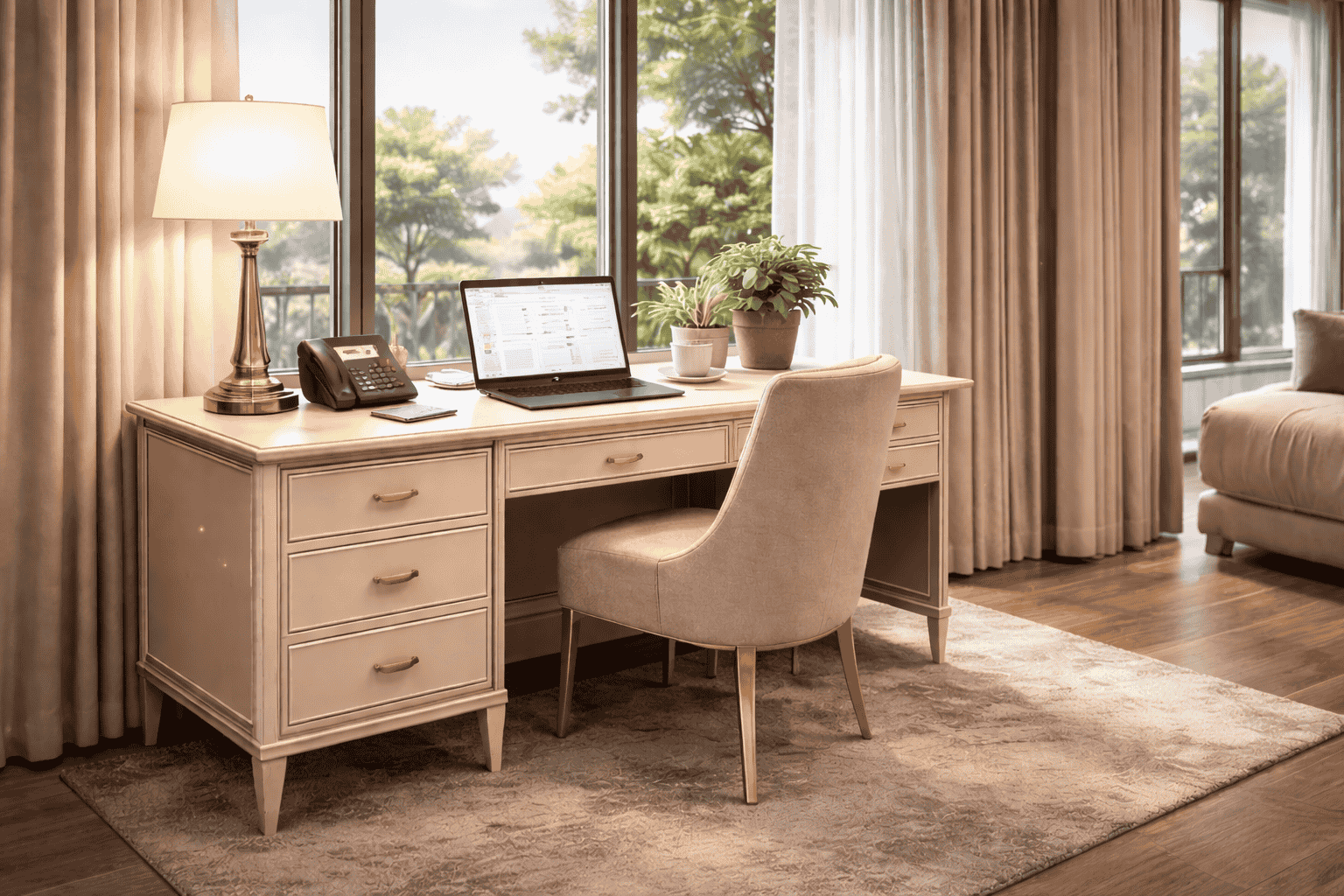
Luxury guests expect more than aesthetics; they demand convenience. A comfortable chair paired with a properly proportioned hotel room desk creates a practical working zone within the room. The ideal desk height, usually around 74–76 cm, supports posture while allowing adequate leg space.
In premium interiors, materials matter. Some properties opt for sleek hotel steel table structures for a contemporary look, while others integrate solid wood or marble surfaces to complement traditional décor. Regardless of style, durability and finish quality must align with overall luxury hospitality furniture standards.
Italian designer Carlo Benedetti once remarked, “Luxury is defined by ease. When a guest can sit, work, and feel comfortable without adjusting their posture or searching for sockets, you have achieved intelligent design.” His perspective highlights that functionality enhances perceived value.
Impact on ADR and Revenue Performance
Workspace design may appear minor compared to grand lobbies or statement suites, yet it directly affects pricing power. Hotels catering to business travellers and digital nomads can justify higher room rates when rooms support productivity.
A well-integrated hotel room desk increases room versatility. It allows properties to market rooms as suitable for work-from-hotel packages, extended stays, and executive bookings. These positioning strategies can positively influence ADR and occupancy rates.
Modern travellers often browse room images before booking. A visible, stylish desk—particularly one crafted with refined modern hotel furniture aesthetics—adds credibility and appeal. In competitive urban markets, this detail can differentiate one property from another.
Design, Durability, and Materials Matter
A functional desk must withstand regular use. Premium materials such as powder-coated metal frames or reinforced wood structures ensure longevity. In contemporary interiors, a hotel steel table base paired with a wooden or stone top offers both strength and visual sophistication.
Cable management is another critical consideration. Built-in USB ports, concealed wiring channels, and accessible power outlets improve usability. Today’s guests expect seamless integration of technology within their workspace.
From a design perspective, the hotel room desk should complement surrounding furnishings. It must align with the broader luxury hospitality furniture concept rather than feel like an afterthought. Cohesion between desk, chair, and lighting creates a polished impression.
Supporting Boutique and Premium Hotel Positioning
Boutique hotels can use desk design as part of their storytelling. A handcrafted wooden desk may evoke artisanal heritage, while a minimalist modern hotel furniture solution reinforces contemporary branding.
Premium hotels benefit from versatility. Modular desk solutions allow rooms to adapt for various guest profiles. Whether hosting a corporate executive or a creative professional, a functional hotel room desk demonstrates attentiveness to evolving travel patterns.
German interior specialist Anna Krämer notes, “Luxury today is intelligent comfort. Furniture must adapt to guest lifestyles.” In that sense, workspace design becomes part of the hospitality narrative.
Conclusion: A Strategic Investment for Modern Hotels
In modern travel, functionality equals luxury. A thoughtfully designed hotel room desk reflects awareness of current guest behaviour and enhances perceived value. Combined with durable materials such as a sleek hotel steel table frame and coordinated modern hotel furniture, it strengthens both brand image and operational performance.
For hotel owners seeking long-term competitiveness, investing in high-quality luxury hospitality furniture that includes a functional workspace is not simply a design upgrade—it is a revenue-driven decision.
Does your property currently offer a dedicated and ergonomic desk solution? If not, it may be time to rethink how workspace design supports your hotel’s growth.
Schreibe einen Kommentar