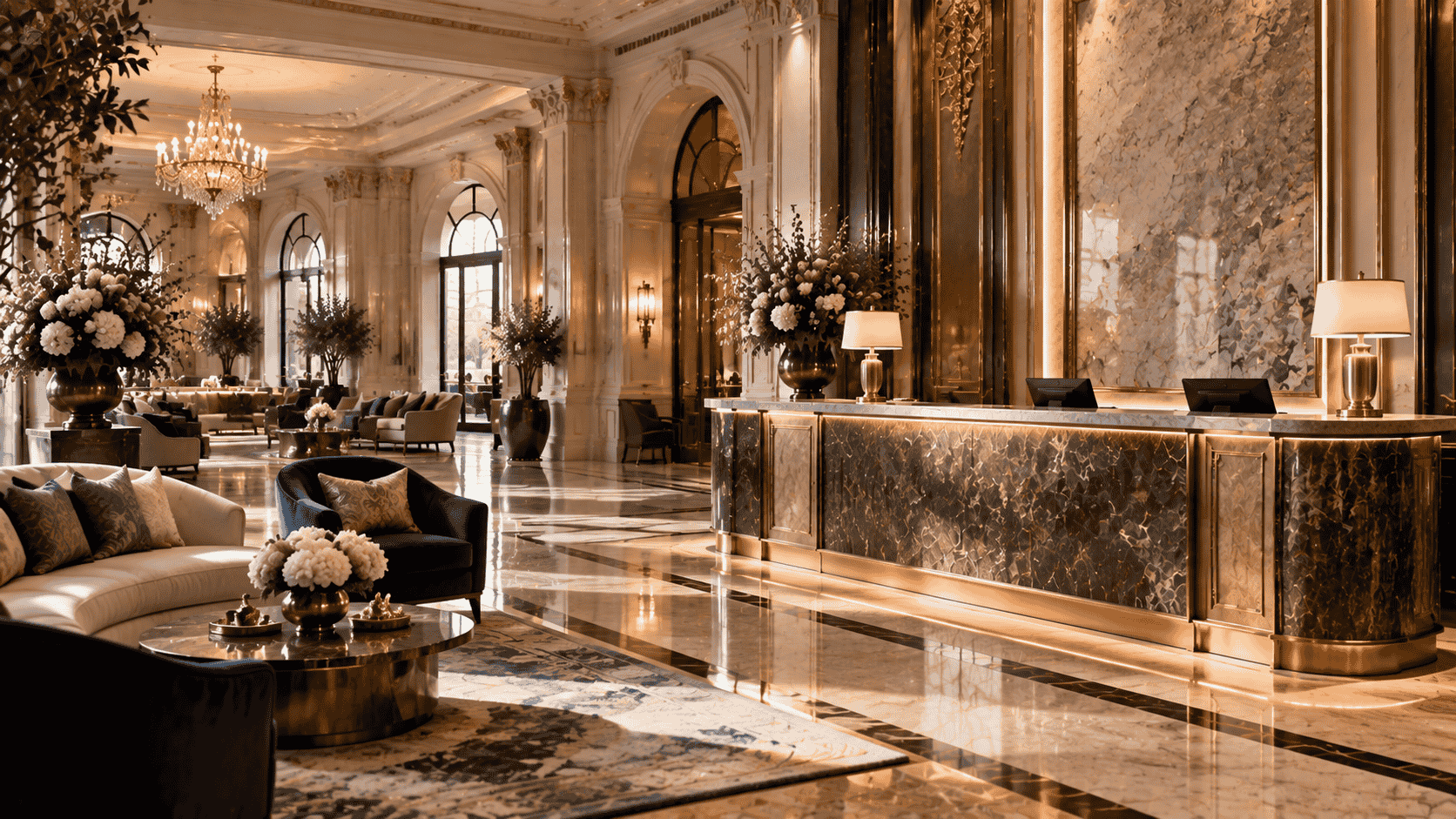
European palace lobbies were never designed merely for arrival. They were staged environments that communicated status, continuity and welcome the moment a visitor crossed the threshold. High ceilings, carefully controlled light, rich materials and a clear sense of procession shaped first impressions that lingered long after the visit ended.
Contemporary luxury hotels have studied these spaces closely. While few modern properties attempt literal recreation, the most memorable lobbies still draw on the same underlying principles. The difference lies in how those principles are translated for today’s guests, operational realities and brand expectations. At the centre of this translation sits the luxury hotel reception desk and the wider composition of hotel lobby furniture that surrounds it.
The Enduring Power of First Impression
Palace architects understood that the entrance sequence set the emotional temperature of the entire visit. Scale, material richness and a sense of calm order worked together to create an atmosphere of considered hospitality. Modern hotels apply the same logic, even when the architectural language is lighter or more contemporary.
A successful hotel lobby reception desk does not simply process check-ins. It anchors the arrival experience. When the desk is well proportioned, thoughtfully lit and materially consistent with its surroundings, guests feel the space has been composed rather than assembled. That feeling of intention is one of the clearest lessons taken from historic palace design.
Scale and Proportion Without Excess
Grand palace halls relied on generous volume. High ceilings and long sight lines created a sense of importance. Today’s luxury hotels rarely have the same cubic metres available, yet they still pursue a similar effect through careful proportion.
Designers often raise the perceived height of the reception zone with vertical elements, layered lighting or a strong back wall. The desk itself is scaled to feel substantial without dominating every view. In boutique properties a more intimate volume can still convey quality when materials and detailing are precise. The goal is presence, not theatrical bulk.
Material Honesty and Tactile Quality
Palace interiors favoured materials that aged with dignity: stone, timber, metal and finely worked surfaces that rewarded close attention. Contemporary luxury hotels continue this preference, even when the overall aesthetic is quieter.
A well-specified luxury hotel reception desk frequently combines stone or engineered surfaces with timber, metal accents or carefully finished veneers. These materials communicate permanence. Guests register the difference between a surface that feels solid and one that feels temporary. The same principle extends to the surrounding hotel lobby furniture. Consistency of material language across seating, consoles and the desk itself strengthens the sense of a coherent environment.
Light as a Design Tool
Historic palace lobbies used natural light and carefully placed artificial sources to shape mood and highlight architectural detail. Modern hotels apply the same discipline with greater technical control.
Layered lighting around the reception area allows the space to shift from bright daytime clarity to warmer evening atmosphere. Accent light on the desk or feature wall draws the eye without creating glare. Soft, even illumination on working surfaces supports staff while preserving the overall calm. When lighting is resolved thoughtfully, the reception zone feels composed at every hour of the day.
Creating a Sense of Procession
Palace planning often guided visitors through a sequence of spaces before they reached the most important rooms. The journey itself prepared the visitor. Many successful modern lobbies retain a version of this idea.
Arrival is staged rather than abrupt. Guests move from entrance through a transitional zone before reaching the hotel lobby reception desk. Seating, art or a change in flooring can mark the progression. The desk then becomes a clear destination rather than an immediate obstacle. This measured approach reduces the sense of transactional urgency and replaces it with a more gracious rhythm.
Balancing Grandeur with Operational Clarity
Palace lobbies were designed for ceremony. Modern hotel lobbies must also support efficient service, technology and accessibility. The most successful projects absorb operational requirements without allowing them to dictate the entire visual character.
Cable management, equipment storage and accessible counter heights are integrated into the design of the luxury hotel reception desk rather than added later. Staff zones remain functional while the guest-facing elevation stays calm and ordered. When these practical needs are resolved early, the desk can retain the dignity associated with historic reception spaces.
The Role of Surrounding Furniture
A palace lobby was never defined by a single object. The same is true of a memorable hotel lobby. Seating, consoles, lighting and the reception desk work together as a composition.
Hotel lobby furniture that shares material quality and proportional discipline with the desk reinforces the overall atmosphere. Loose seating arranged to create smaller conversational groups can soften the formality of the arrival zone while still feeling connected to it. The result is a space that supports both efficient check-in and more lingering social use.
Translating Heritage into Contemporary Language
The most effective modern interpretations do not copy palace ornament. They extract the underlying principles—scale, material integrity, controlled light and a sense of procession—and express them through current forms and finishes.
A clean-lined desk in stone and timber can carry the same sense of permanence once associated with carved marble. Soft, directional lighting can replace the drama of chandeliers while still creating hierarchy and focus. The emotional effect remains related to historic precedent even when the visual vocabulary has changed.
Designing for Memory
Guests rarely remember the exact dimensions of a reception desk. They remember how the space made them feel on arrival: welcomed, oriented and quietly impressed. Palace lobbies excelled at creating that feeling. Contemporary luxury hotels that study those spaces carefully can achieve a similar result without resorting to pastiche.
When the luxury hotel reception desk is treated as the focal point of a carefully composed arrival sequence, supported by coherent hotel lobby furniture and resolved lighting, the lobby becomes more than a circulation zone. It becomes the first chapter of the guest experience—one that sets expectations for everything that follows.
Hotel owners and designers who approach the reception area with this longer view consistently create spaces that guests recall with clarity. In a competitive market, that memorable quality remains one of the most valuable outcomes of thoughtful lobby design.
Frequently Asked Questions
Do modern luxury hotels need grand architectural volume to achieve a palace-like effect?
No. Careful proportion, material quality and lighting can create a strong sense of presence even in more compact spaces.
Should the reception desk always be the most ornate element in the lobby?
Not necessarily. It should be the most intentional. Clarity of form and material quality matter more than decorative complexity.
How important is the relationship between the desk and surrounding seating?
Very important. Coherent hotel lobby furniture reinforces the overall atmosphere and prevents the reception zone from feeling isolated.
Can these principles work in contemporary as well as heritage buildings?
Yes. The underlying lessons of scale, material honesty and controlled arrival sequences translate effectively across different architectural styles.
Schreibe einen Kommentar