
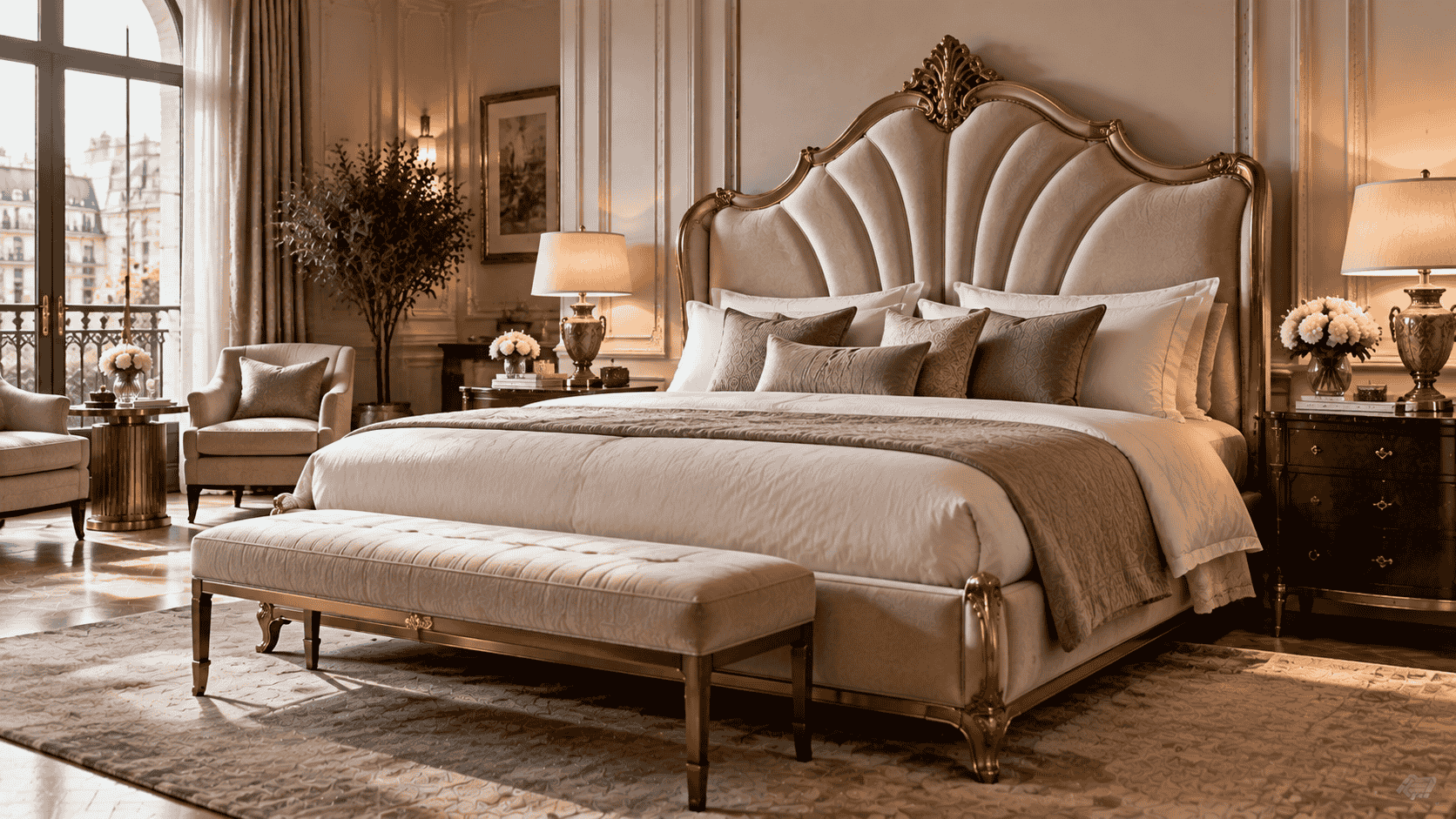
European boutique hotels compete on character rather than scale. In a market where many properties share similar locations and service standards, the bedroom itself has become a primary expression of identity. At the centre of that expression sits the bed.
Instead of relying on uniform catalogue models, leading boutique hotels treat the bed as a signature design element. Custom proportions, distinctive headboards, carefully chosen materials and thoughtful integration with the room create spaces that guests remember and associate with the brand. This approach turns a functional necessity into a memorable focal point.
This article examines how European boutique properties develop unique bed designs and use them to shape coherent, differentiated bedrooms.
Moving Beyond Standard Hotel Layouts
Traditional hotel bedrooms often follow a predictable formula: a standard bed frame, matching nightstands, a desk and a wardrobe arranged along fixed walls. The result is efficient but rarely distinctive. Guests may sleep well yet leave without a strong visual or emotional impression of the room.
Boutique hotels reverse this priority. They begin with the story or atmosphere they want the room to convey, then design the bed as the central piece that carries that narrative. The surrounding furniture and finishes support rather than compete with it. The outcome is a bedroom that feels intentional and specific to the property rather than interchangeable with others in the same city.
Defining a Clear Design Language for the Bed
Successful signature bedrooms start with a defined design language. Some properties favour sculptural, architectural forms with clean lines and unexpected materials. Others draw on local craft traditions, historical references or soft, residential comfort. The chosen direction must remain consistent across the room inventory while allowing variation in scale for different suite categories.
A strong luxury hotel bed becomes the visual and tactile anchor. Headboard height, shape and upholstery set the tone. Frame details—whether exposed timber, wrapped fabric, metal accents or integrated lighting—reinforce the same language. When these elements are resolved early, the rest of the room can be composed around them with greater clarity.
Material and Craftsmanship Choices That Signal Quality
Materials communicate value before a guest sits or lies down. European boutique hotels frequently specify solid timber, high-quality veneers, performance fabrics with rich texture, leather, or combinations of these. The surfaces must withstand daily housekeeping and still feel substantial and pleasant to the touch.
Craftsmanship matters equally. Visible joinery, carefully finished edges, and well-executed upholstery details reward close attention. Guests notice when a headboard is properly padded, when drawers or integrated elements operate smoothly, and when the overall construction feels robust. These qualities elevate hotel style beds above purely decorative statements.
Integrating the Bed with Architecture and Layout
Unique bed designs achieve full impact only when they respond to the specific architecture of the room. In historic townhouses or converted buildings, ceiling heights, window positions and existing mouldings influence the scale and placement of the bed. In new-build boutique properties the bed can be used to define zones within an open plan.
Designers often align the bed with a primary axis or view, creating a natural focal point upon entry. Clearance around the bed remains non-negotiable for both comfort and operations. The goal is a composition in which the bed feels settled within the architecture rather than simply placed against a wall.
Creating Variation Without Losing Coherence
A common challenge is maintaining brand consistency while avoiding monotony across multiple rooms. Leading properties solve this by establishing a core bed design language and then introducing controlled variation. Different headboard heights, fabric colours within a defined palette, or slight changes in frame detailing can distinguish room categories without fracturing the overall identity.
Signature suites may receive more elaborate or one-off interpretations, while standard rooms retain the essential design DNA in a more restrained form. This hierarchy gives guests a sense of progression and reinforces the perception of thoughtful curation.
Balancing Aesthetic Ambition with Sleep Performance
A distinctive bed must still deliver excellent rest. European boutique hotels that succeed in this area specify high-quality mattresses, supportive bases and practical features such as accessible power points or subtle reading lights. The visual design never compromises the core function of sleep.
Some properties develop proprietary sleep systems or partner with specialist manufacturers to create a consistent and superior experience that guests associate with the brand. When the bed looks memorable and performs reliably, both design and operational goals are met.
The Role of Textiles and Layering
Bedding and headboard upholstery extend the design language into the tactile realm. Layered textiles—crisp sheets, textured covers, thoughtfully chosen cushions—add depth without clutter. In boutique settings these layers are often calibrated to the season or the specific room story, reinforcing the sense of a considered interior rather than a standardised product.
The headboard fabric itself frequently becomes a key branding element. A distinctive weave, colour or subtle pattern can be repeated or varied across the inventory, creating visual continuity that guests recognise even if they cannot immediately name it.
Practical Considerations for Implementation
Developing unique hotel beds requires close collaboration between owners, designers and manufacturers. Early decisions about dimensions, materials, fire performance and maintenance protocols prevent later compromises. Prototyping and testing under real housekeeping conditions help refine details before full rollout.
Lead times for custom or semi-custom pieces are typically longer than for catalogue items. Planning accordingly protects project schedules. The investment is justified when the finished rooms deliver stronger guest satisfaction, clearer brand differentiation and longer product life through higher-quality construction.
Lasting Impact on Guest Experience and Brand
When a European boutique hotel commits to distinctive bed design, the bedroom ceases to be a neutral container for sleep. It becomes a memorable environment that expresses the property’s character. Guests notice the difference, photograph the rooms, and often cite the bedroom experience in reviews.
This approach supports premium positioning and encourages loyalty. In a competitive market where many hotels offer comparable service levels, a signature luxury hotel bed and the room composed around it provide a tangible point of difference that is difficult to replicate.
Hotel owners who treat the bed as a strategic design asset rather than a standard procurement item consistently create bedrooms that feel both unique and coherent. The result is an inventory of rooms that guests remember for the right reasons—and return to.
Frequently Asked Questions
Do unique bed designs require fully custom manufacturing?
Not always. Many successful projects combine a distinctive headboard or frame design with proven commercial mattress and base systems, balancing individuality with reliability.
How can smaller boutique hotels achieve signature bedrooms on a limited budget?
Focusing investment on a strong headboard design, quality upholstery and consistent material language often delivers the greatest visual impact without requiring entirely bespoke frames for every room.
Should every room have a completely different bed?
No. A coherent design language with controlled variation across categories usually creates a stronger brand impression than fully unrelated designs.
How important is the mattress relative to the visible bed design?
Both matter. Guests experience the mattress directly through sleep quality, while the visible design shapes first impressions and lasting memory of the room.
Schreibe einen Kommentar