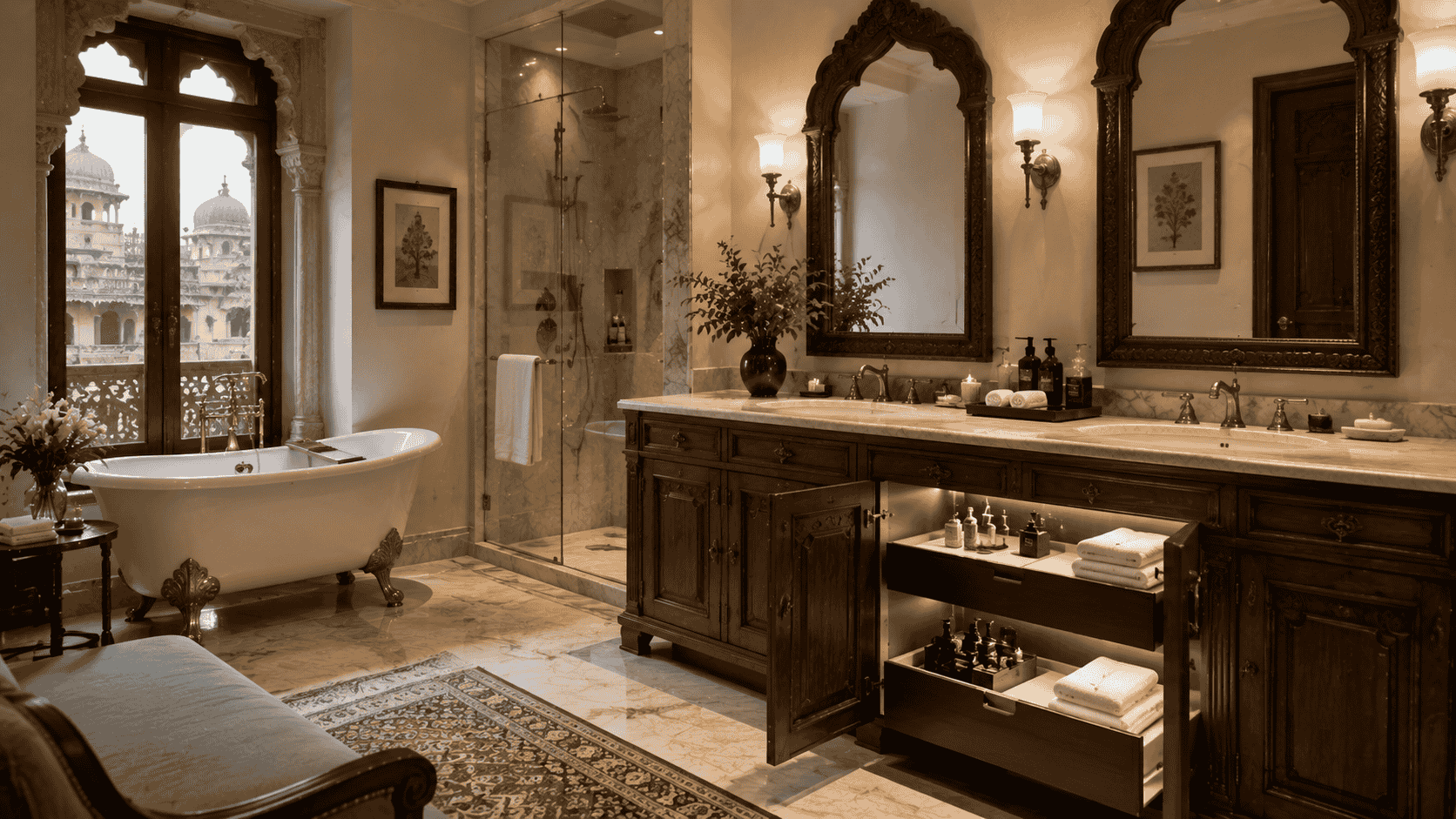
A 17th-century Tuscan villa. A converted Edinburgh townhouse. A Lisbon palace turned boutique stay. These properties share one struggle. Guests expect flawless modern bathrooms. Planners demand protected feature preservation. The solution sits squarely inside your hotel bathroom furniture.
Heritage hoteliers in 2026 walk a tightrope. Remove original details, and you lose soul. Install subpar fixtures, and online reviews punish you. The bathroom—once an afterthought—now drives booking decisions. And bathroom cabinets stand at the center of this clash.
Why Standard Vanities Fail Historic Properties
Walk into any mass-market supplier. Their bathroom storage units assume square walls, standard plumbing depths, and zero architectural quirks. Heritage properties offer none of those.
Sloping floors. Off-set wall studs. Protruding chimney breasts. Original skirting that cannot be cut. A prefabricated cabinet either wedges awkwardly or requires destructive alteration. Neither option serves preservation.
Worse, modern finishes scream against aged plaster and reclaimed stone. A high-gloss white cabinet next to 400-year-old oak beams looks like a mistake. Guests notice. They photograph it. They write „jarring renovation“ in their reviews.
The 2026 Guest Expectation for Bathrooms
Today’s luxury traveler wants a rainfall shower, heated towel rail, and generous counter space. But they also want authenticity. They did not book a heritage property for a generic hotel bathroom. They booked for character.
This means your luxury bathroom furniture must do double duty. It must store toiletries, hide plumbing, and support marble tops. Simultaneously, it must echo the period through material, proportion, or craftsmanship.
One successful approach: custom-built bathroom cabinets using reclaimed wood from the property’s own renovation. The grain matches. The patina tells a story. And modern soft-close hinges hide inside invisible joinery.
Solutions That Respect Protected Features
European heritage properties face strict preservation laws. You cannot rip out original wall paneling. You cannot move cast-iron soil stacks. So how do you add functional bathroom storage without violating regulations?
Modular freestanding units offer the answer. A hotel bathroom furniture piece that sits on original tile or stone, anchored only by gravity and clever weight distribution, requires zero wall penetration. This preserves plaster, lath, and any hidden historical finishes behind.
Freestanding bathroom cabinets also adapt to irregular floor levels. Adjustable brass feet compensate for slopes up to three centimeters. The exterior remains level. The cabinet never touches original wall surfaces.
For wall-hung requirements, bracket systems mounted into existing grout lines allow later removal without trace. Preservation officers approve this approach. Modern guests receive the floating vanity aesthetic they expect.
Material Selection That Bridges Eras
Brass. Oak. Marble. Terrazzo. These materials appear in both 17th-century palaces and 2026 design awards. They are your bridge.
A luxury bathroom furniture piece in unlacquered brass develops natural patina over time. It matches aged bronze door handles. It does not look new. It looks evolved.
Similarly, European oak with a hard wax oil finish resists moisture while showing grain character. Avoid high-gloss lacquers. Avoid polyurethane. Avoid anything that reflects light like a plastic. Guests sense the difference instantly.
Storage Without Sacrificing Space
Heritage bathrooms run small. Servants‘ quarters became guest baths. Dressing rooms became ensuites. Every centimeter matters.
Vertical bathroom storage solves this. Tall, narrow cabinets fitting between window frames or beside chimney breasts add significant capacity without floor footprint. Inside, pull-out trays for toiletries and hidden electrical outlets for razors maintain modern function.
Drawer dividers matter more than guests realize. A bathroom cabinet that organizes small items prevents counter clutter. And counter clutter ruins the period aesthetic faster than any modern fixture.
Working With, Not Against, Quirks
That odd alcove where a chimney once stood? Build a recessed cabinet into it. That sloping ceiling over a bath? Angled cabinet doors following the roofline. The best hotel bathroom furniture celebrates irregularities instead of fighting them.
One Normandy property turned a former priest hole into a narrow pull-out bathroom storage tower. Guests still discover the hidden compartment. Now it holds extra towels instead of fleeing clergy. Reviews call it „charming and clever.“
Conclusion
Heritage hotels do not need to choose between preservation and performance. The right bathroom cabinets honor period details while delivering 2026 guest standards. Custom dimensions, freestanding designs, and timeless materials make both possible.
Your bathroom furniture strategy either strengthens your story or undermines it. Choose the path that lets guests say, „They kept the charm. They fixed the function.“
You may also read
How to Choose a Rainfall Shower System for a Luxury Hotel Bathroom
Schreibe einen Kommentar